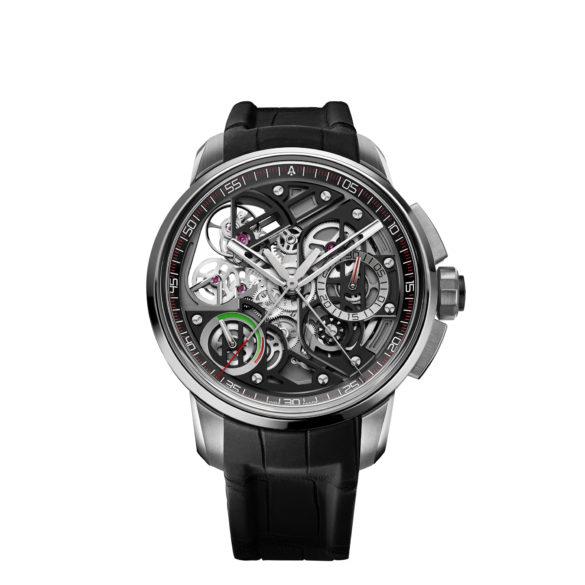
The 47-millimeters Angelus U30 Tourbillon Rattrapante unites three complications in a contemporary, three-dimensional form
Titanium
Titanium is a chemical element with the symbol Ti and atomic number 22. It is a lustrous transition metal known for its strength, low density, and corrosion resistance. It is often alloyed with other metals to enhance its properties, and these alloys are widely used in various industries.
.
What are the characteristics of titanium ?
.
Strength and Low Density: Titanium is known for its high strength-to-weight ratio, making it a valuable material in applications where lightweight strength is crucial, such as aerospace engineering.
.
Corrosion Resistance: it has excellent corrosion resistance, even in challenging environments. This property makes it suitable for use in chemical processing, marine applications, and medical implants.
.
Biocompatibility: it is biocompatible, meaning it is generally well-tolerated by the human body. This makes it a common material for medical implants, such as artificial joints and dental implants.
.
High Melting Point: it has a relatively high melting point, contributing to its ability to withstand high temperatures. This property is beneficial in applications like the aerospace industry.
.
Versatility in Alloys: Titanium is often alloyed with other metals, such as aluminum, vanadium, and iron, to create alloys with specific properties tailored to particular applications.
.
Corrosion Resistance: Titanium exhibits excellent resistance to corrosion, even in aggressive environments. This makes it valuable in applications where resistance to corrosion is crucial.
.
Common uses of titanium include aircraft components, spacecraft, naval ships, medical implants, sporting equipment, and chemical processing equipment. While titanium is abundant in the Earth’s crust, its extraction and processing can be challenging, contributing to its relatively high cost compared to other metals.
.
How hard is titanium?
.
The Vickers hardness (HV) of titanium used in watches varies depending on the specific alloy and whether it has been heat-treated. Here are typical values for titanium in watchmaking.
.
The first is grade 2 titanium (commercially pure titanium), with 150 to 200 HV, comparable with 316L stainless steel. It not extremely hard but very lightweight and highly resistant to corrosion, making it a popular choice for watches.
.
Grade 23 is the second value. Grade 23 titanium, also known as Titanium 6Al-4V ELI (Extra Low Interstitial), has a Vickers hardness (HV) ranging between 250 and 330 HV. This titanium alloy is favored in high-performance applications due to its excellent strength-to-weight ratio, biocompatibility, and superior corrosion resistance. It is commonly used in aerospace, medical implants, and premium watch cases.
.
Another grade often used is grade 5 titanium (Ti-6Al-4V), a titanium alloy with aluminum and vanadium. This has a Vickers hardness of about 300 to 400 HV, so it is much harder than grade 2 titanium and is often used in high-end or sport watches. Just because it offers a good balance between hardness, strength, and corrosion resistance. But it’s also more expensive, so sometimes watchmakers combine the two grades.
.
While titanium is not as hard as materials like ceramic or sapphire, it is much lighter and offers excellent resistance to wear and corrosion. Making it a favorite for watch cases and bracelets. And some brands apply surface treatments (like DLC coating) to further increase the hardness and scratch resistance.
.
Compare case materials on the Hardness Vickers scale (from hard to hardest):
.
| Carbon | 20-50 HV |
| Platinum | 40 HV (950 platinum: 80-135 HV) |
| Silver | 70-90 HV |
| Bronze | 60-150 HV (100-200 HV treated) |
| Aluminium | 120-200 HV |
| Gold | 120-200 HV (18k or 14k) |
| Palladium | 150-200 HV |
| White gold | 150-250 HV |
| Stainless steel | 150-250 HV (special 1200 HV) |
| Titanium | 150-200 HV (grade 2) up to 300-400 HV (grade 5) |
| Ceramic | 1200-1400 HV (1500-2000 for alumina) |
| Sapphire | 2000-2300 HV |
.
Watches from titanium
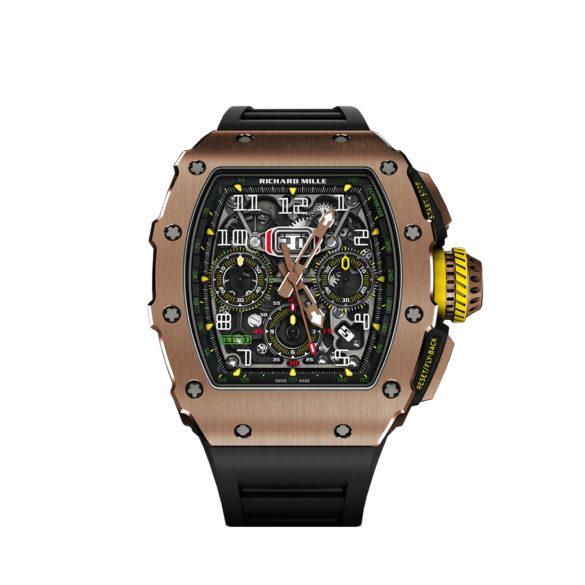
After 10 years Richard Mille has restyled the RM 11: this is the Richard Mille RM 11-03 Automatic Flyback Chronograph
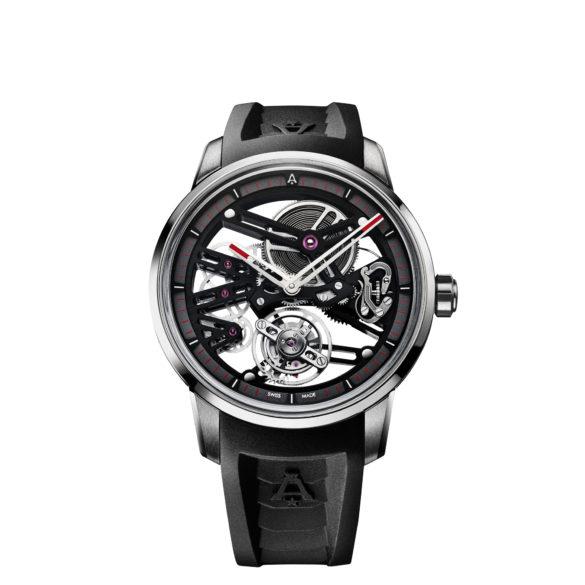
The Angelus U40 Racing Tourbillon Skeleton is the latest model from the revived Swiss brand Angelus that restarted in 2015
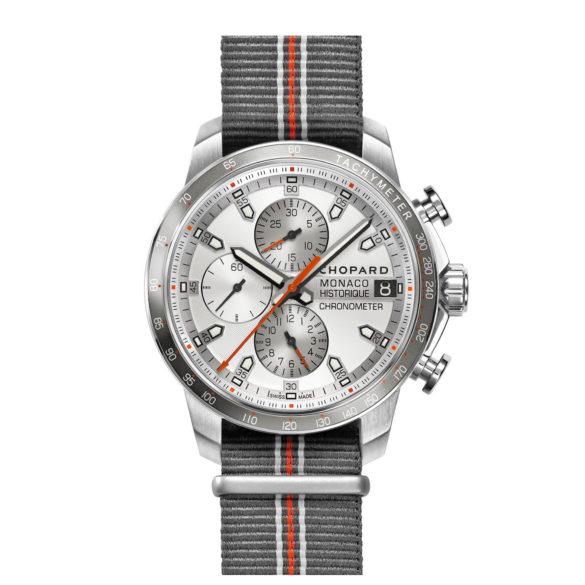
This year’s model of the Chopard Grand Prix De Monaco Historique 2016 Race Edition is more sophisticated and has a rose gold version too
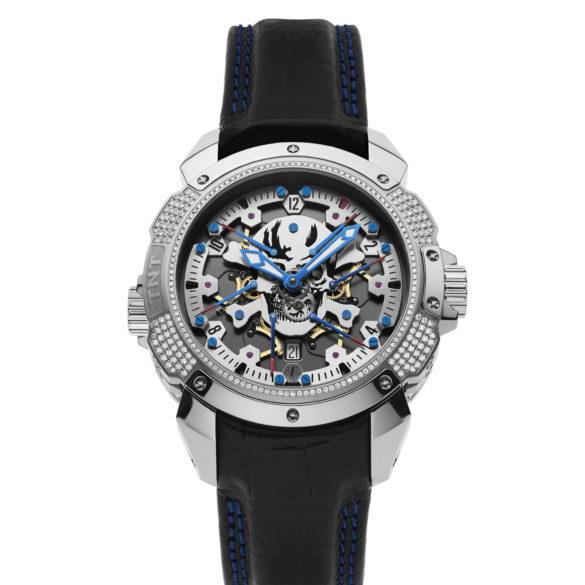
When talking about exceptional watch design you have to take a look at this rather weird Pierre DeRoche TNT Royal Retro Skull
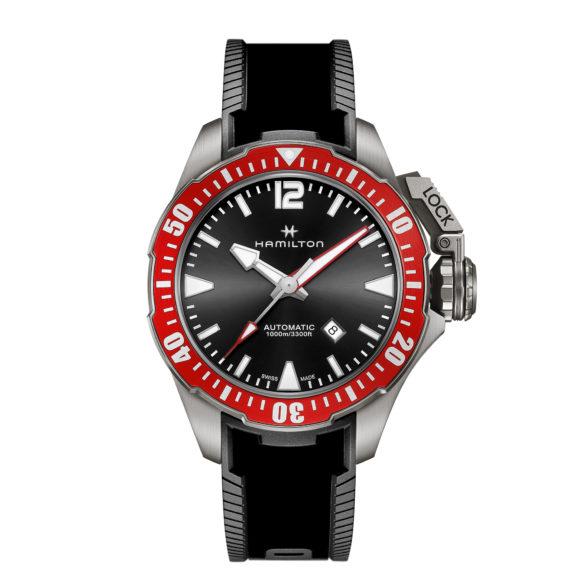
This is the new Hamilton Khaki Navy Frogman, a remake of the Frogman that appeared in the movie The Frogmen in 1951
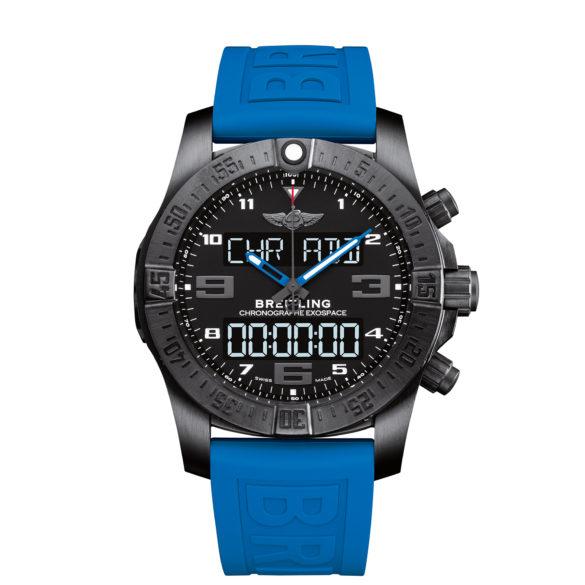
The Breitling Exospace B55 Connected Chronograph is the first chronograph from Breitling that connects with your smartphone
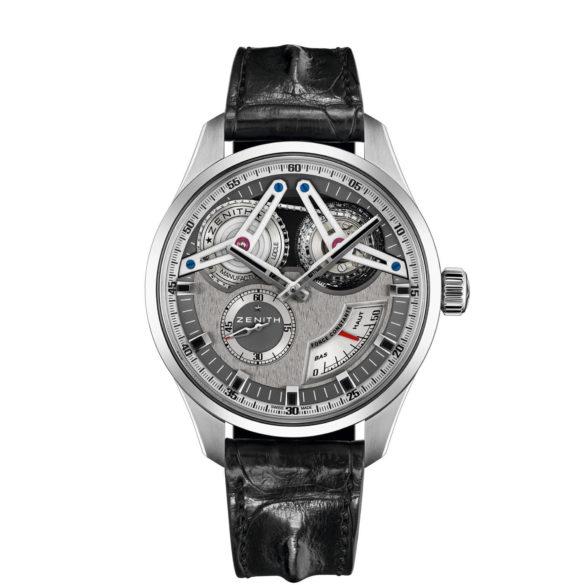
The Zenith Academy Georges Favre-Jacot Titanium is a tribute to the founder of the 150-year-old brand, Georges Favre-Jacot
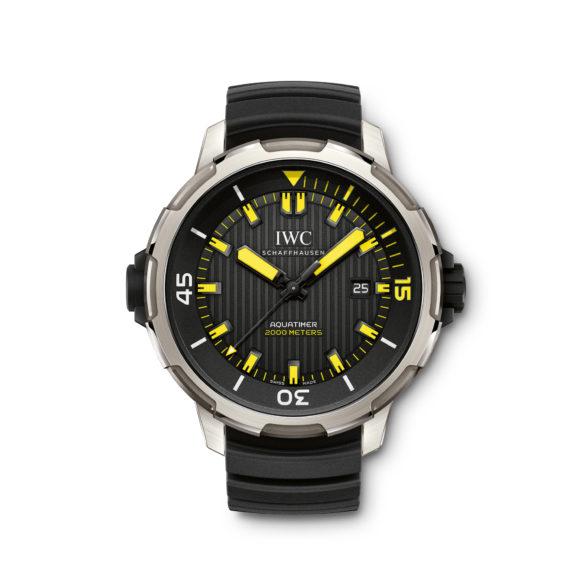
The IWC Aquatimer Automatic 2000 is designed by Ferdinand Porsche, in 1982, while the first Aquatimer appeared in 1967